115-Foot Block Retaining Wall Replaces Failing Timber Wall on Eroding Hillside
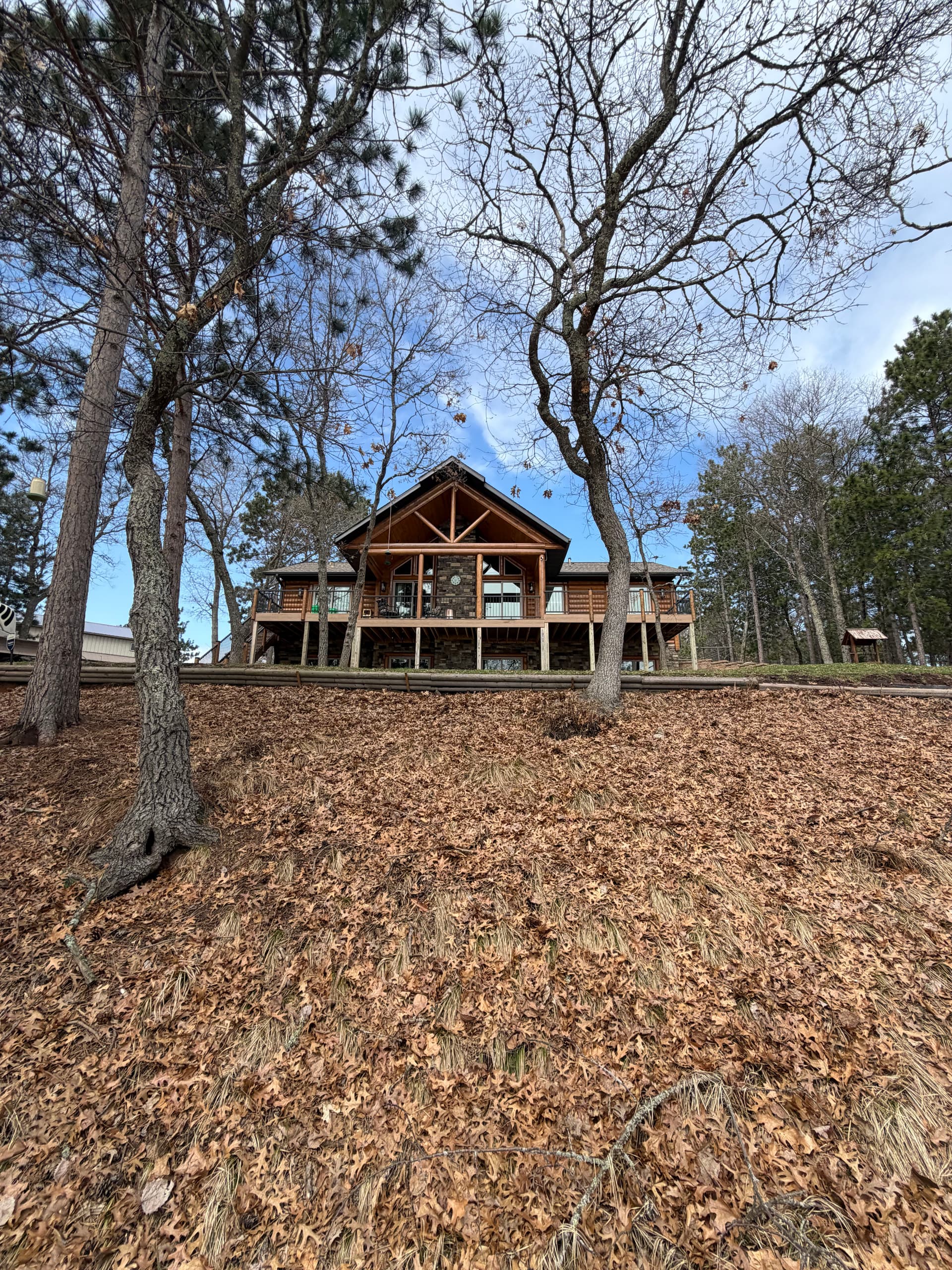
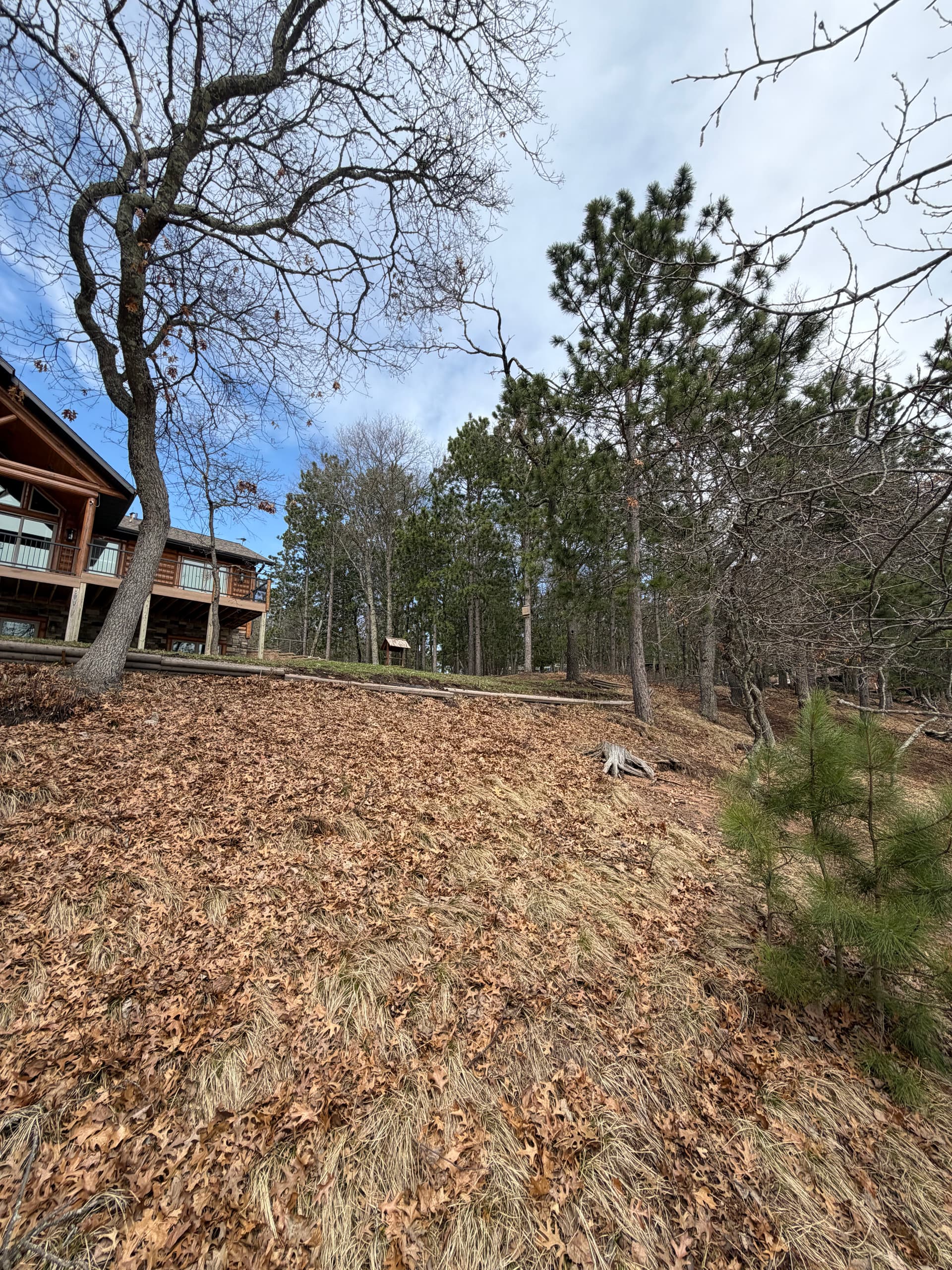
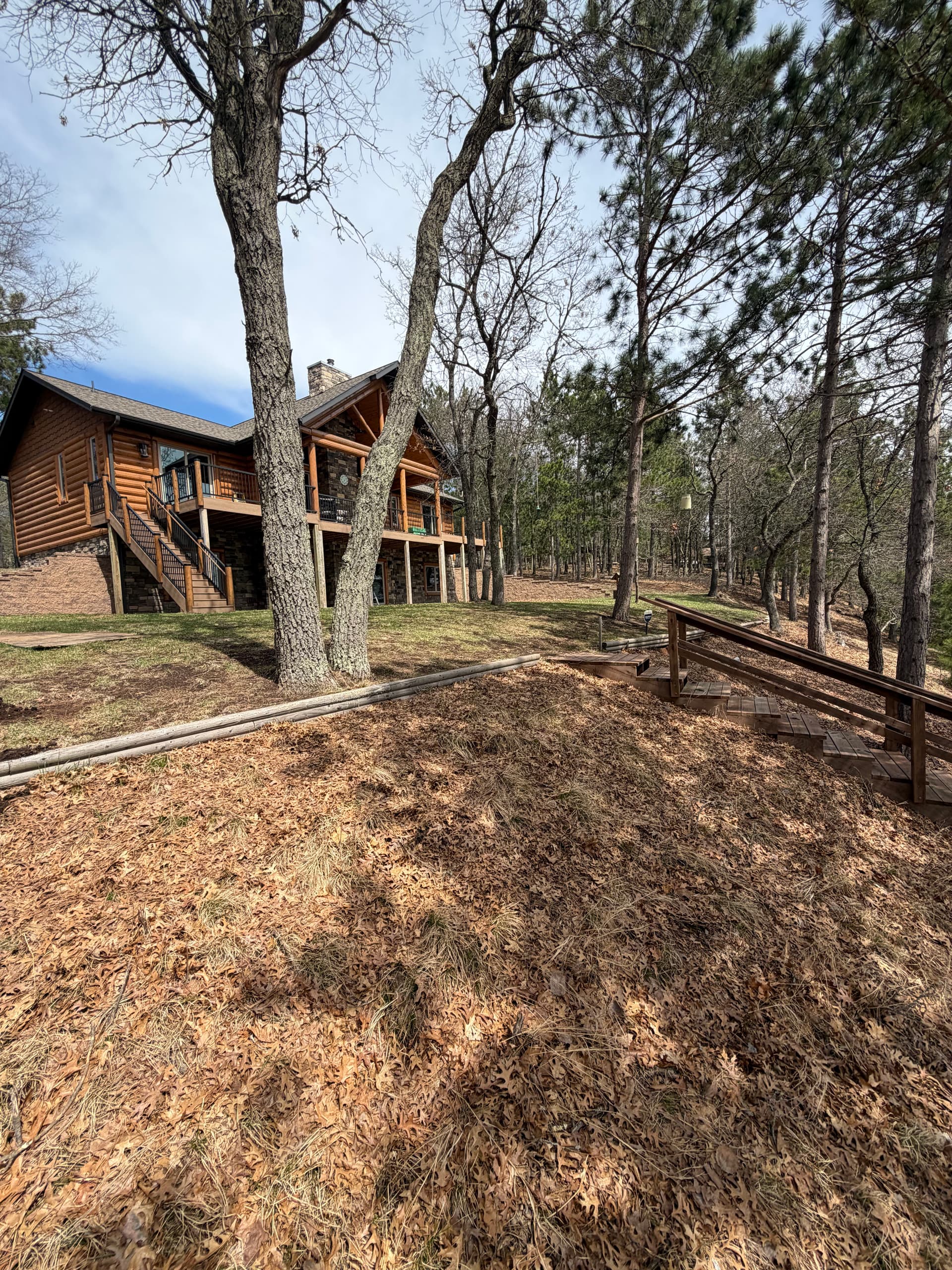
Old timber retaining walls have a shelf life. They rot, they shift, and eventually they just stop doing their job. When that happens on a sloped property, every rain event takes a little more soil with it. That's exactly the situation we were dealing with here - a hillside that needed real, lasting support before the erosion got any worse.
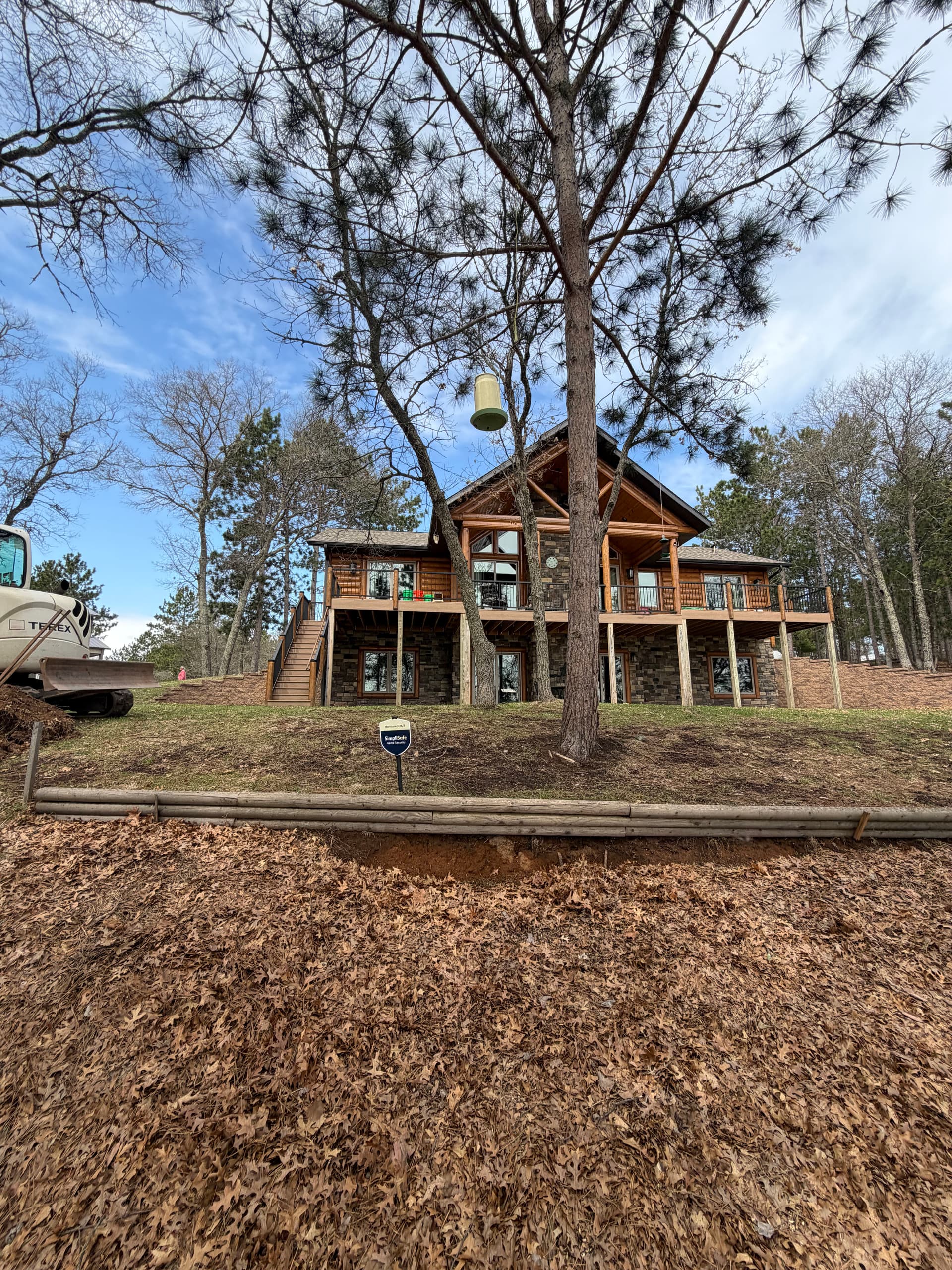
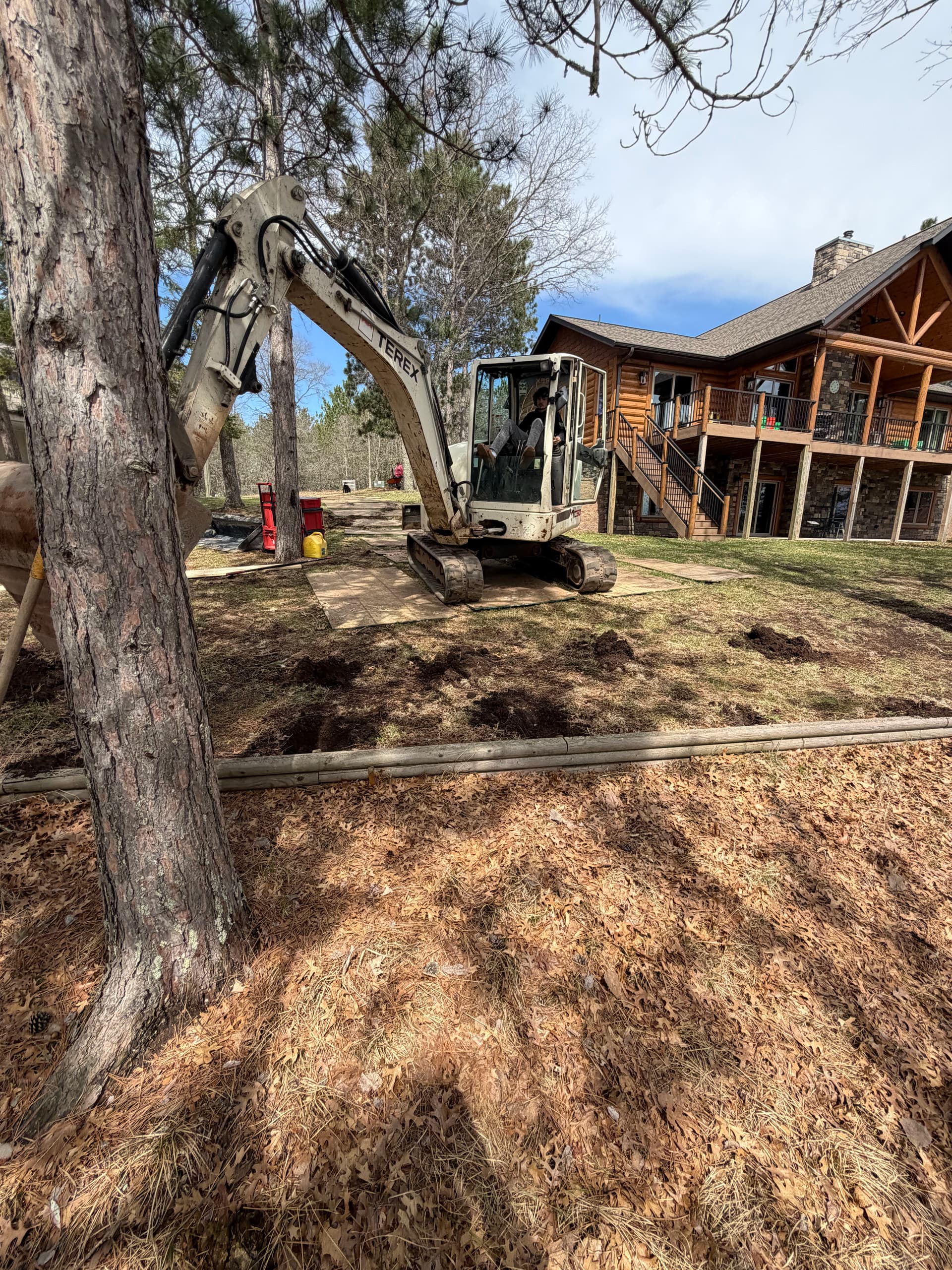
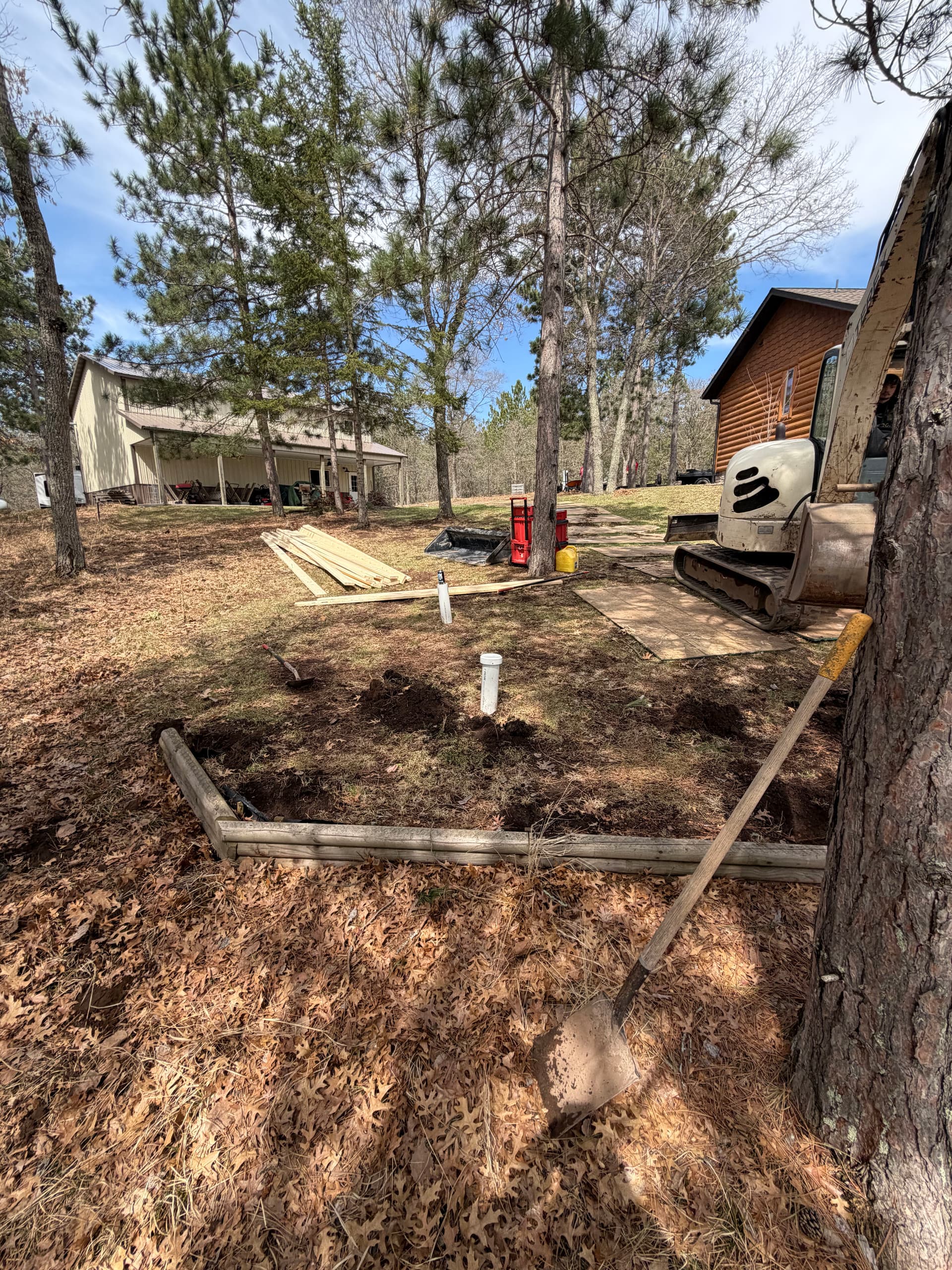
We pulled out the old timber wall and started fresh. The excavation phase is where the real groundwork happens - getting the base right, making sure the grade is set properly, and building a foundation that the block wall can actually perform on. You can see the Terex mini excavator working the site during that phase, with the old timber edging still visible as we worked through the teardown and prep.
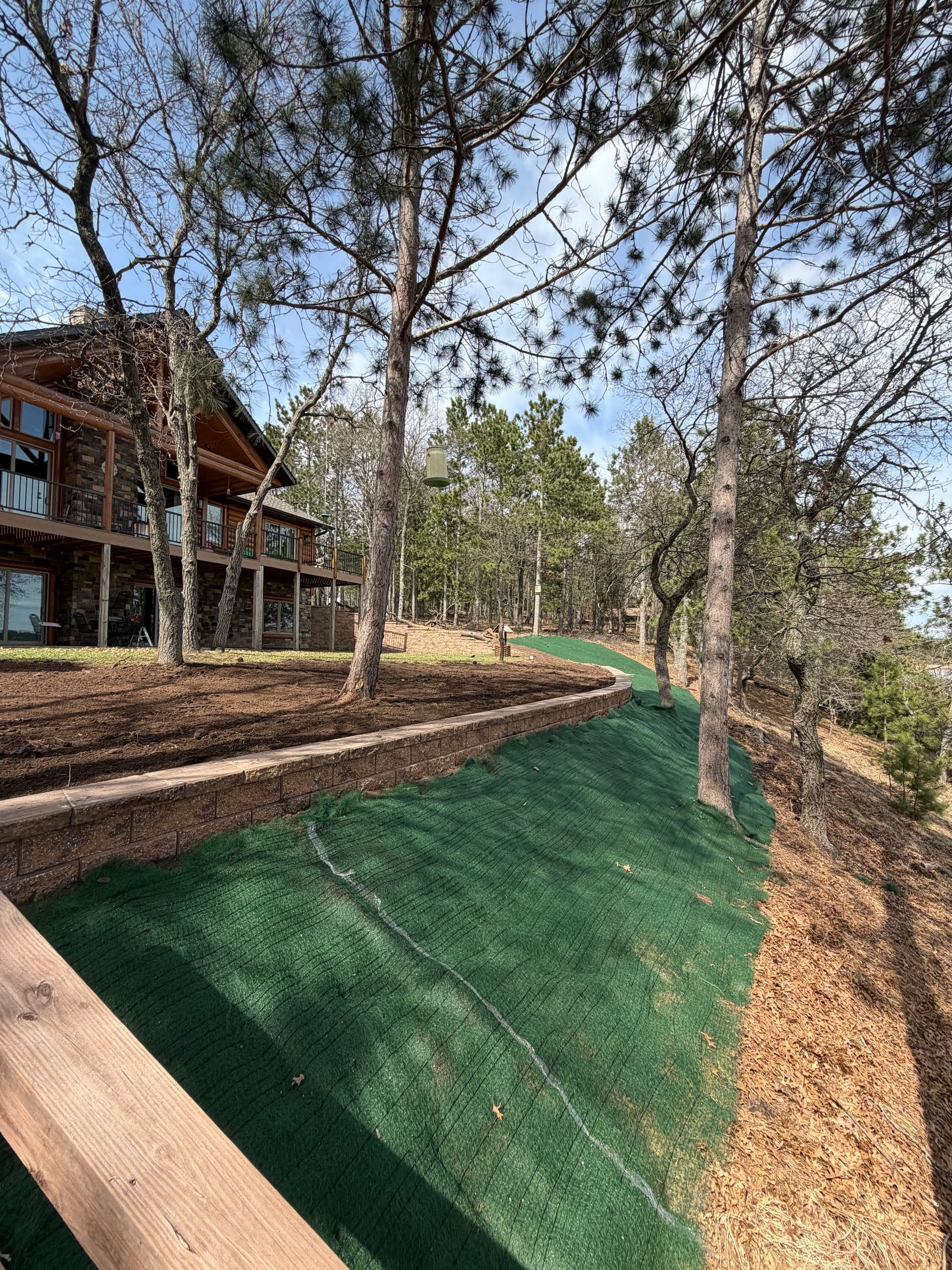
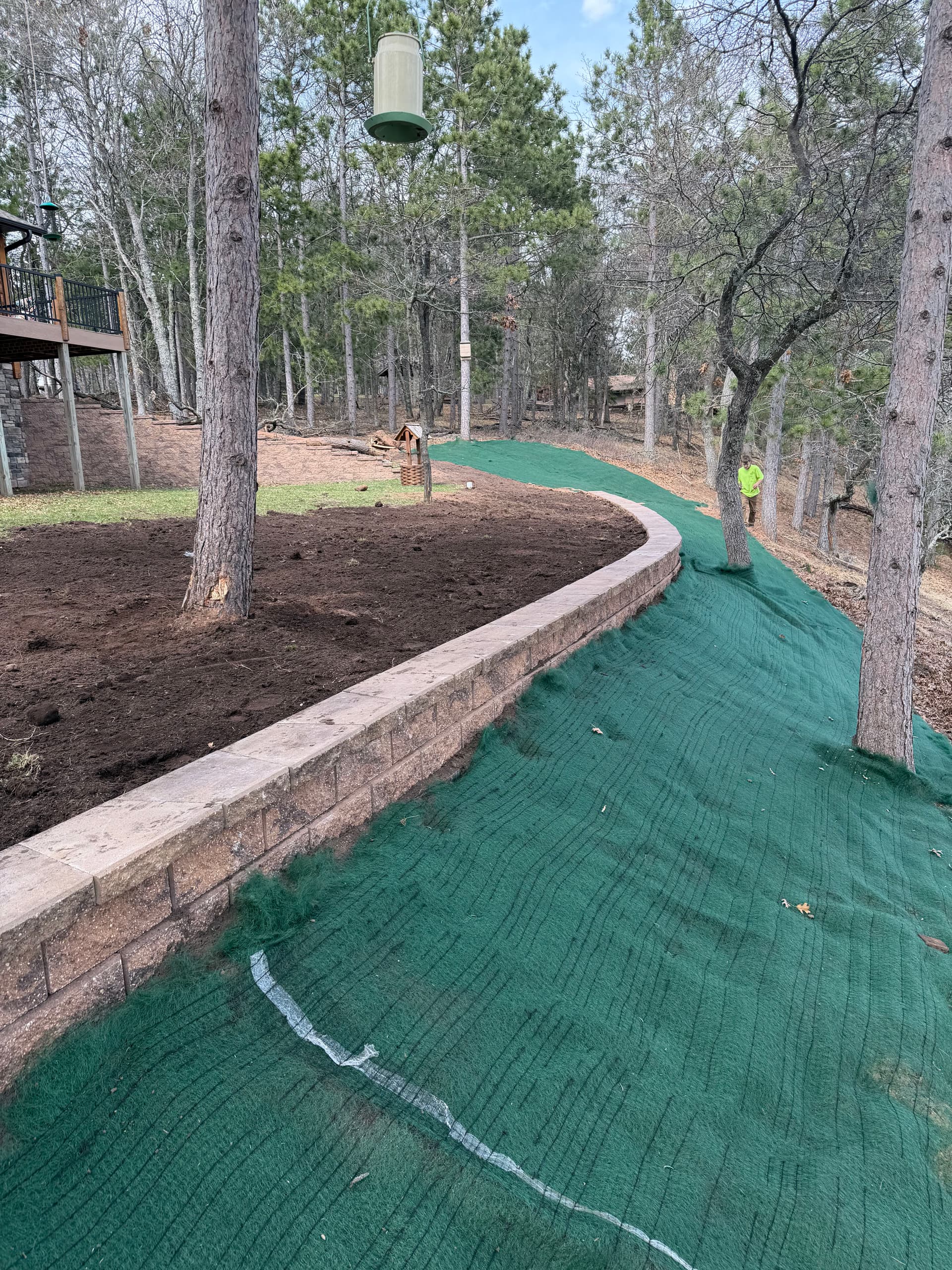
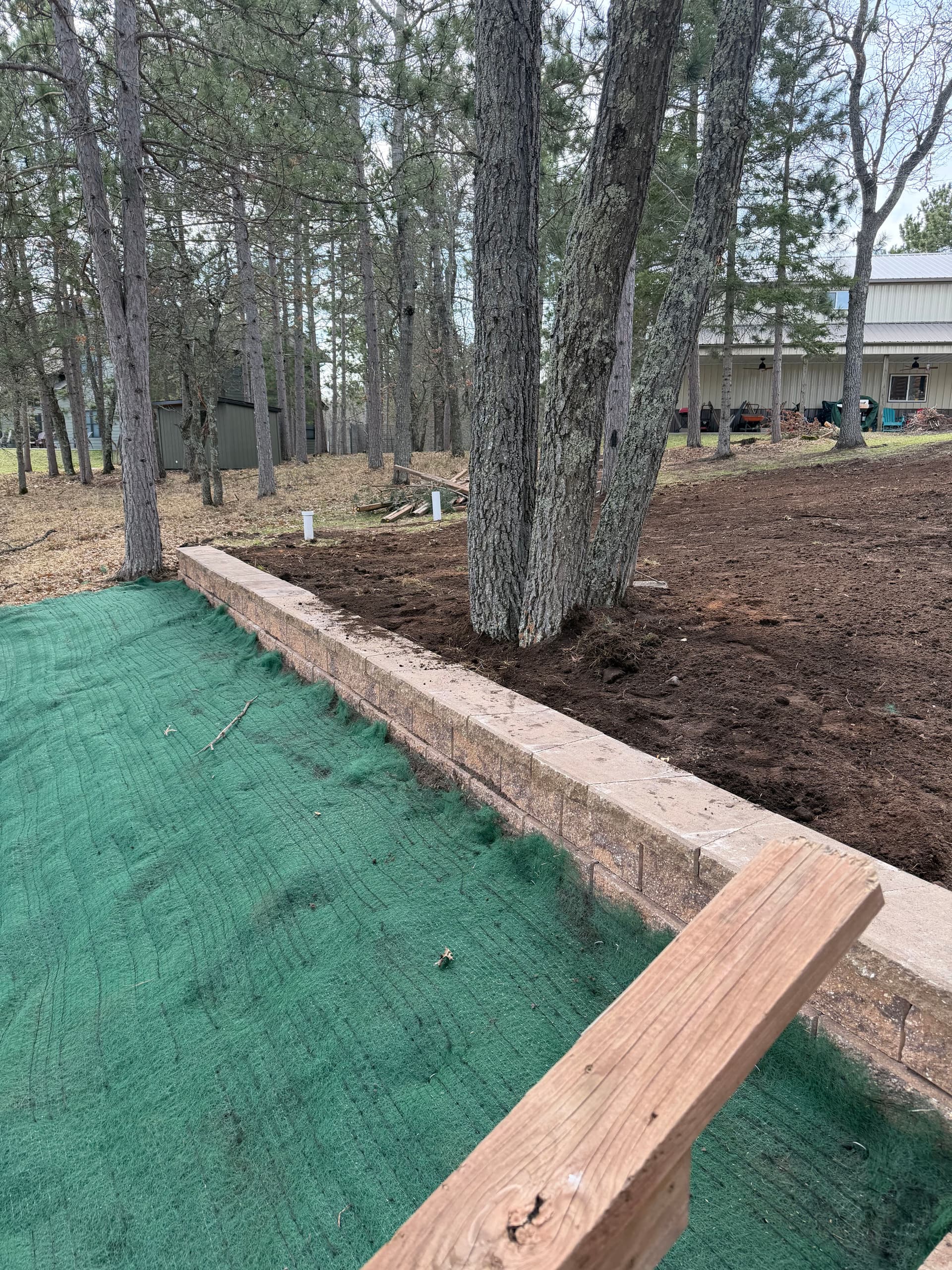
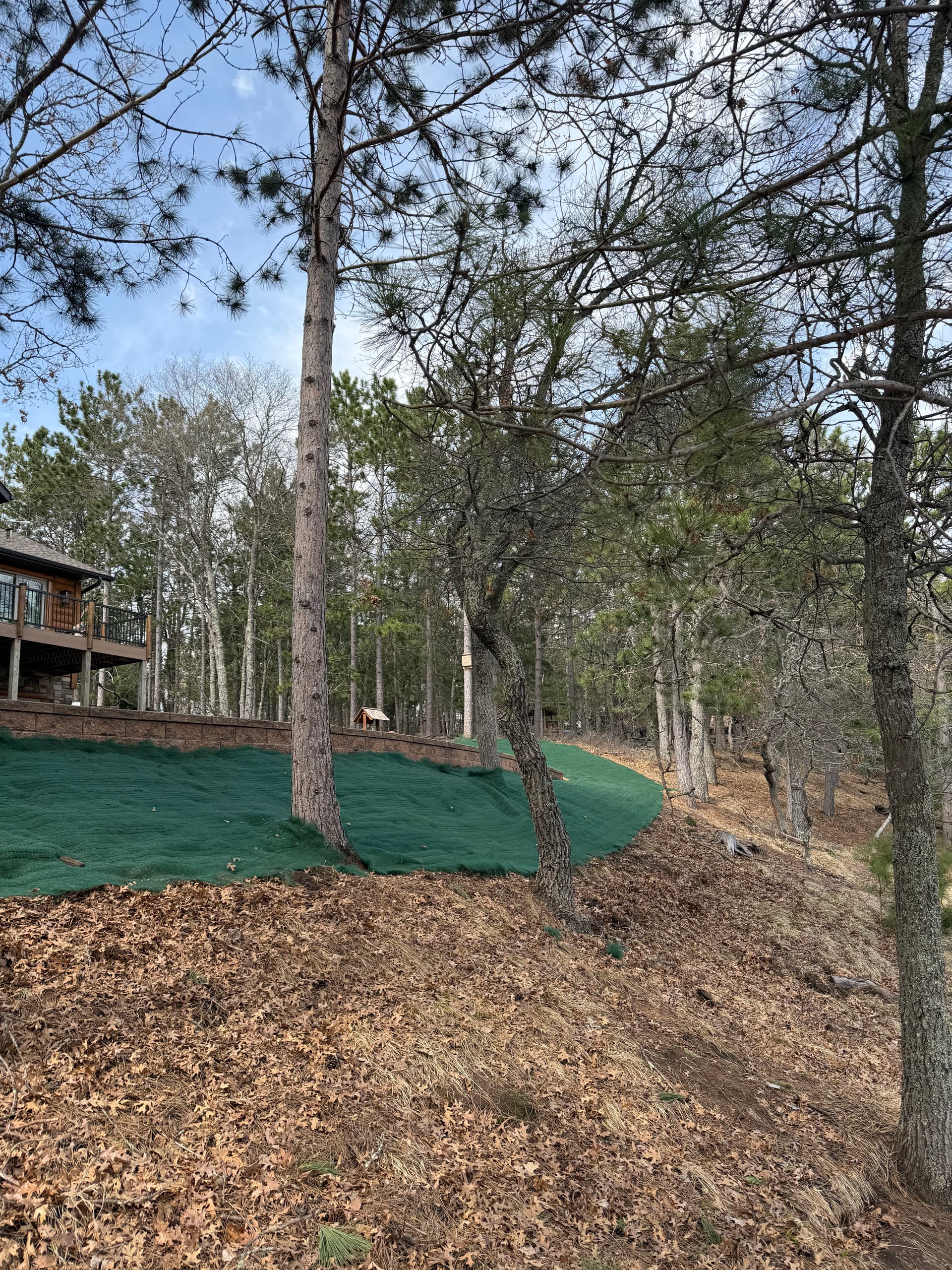
The finished wall runs 115 feet and follows the natural curve of the hillside. That curve matters - it's not just aesthetic. A wall that works with the landscape holds better over time than one forced into a straight line on terrain that doesn't call for it. We used concrete segmental block throughout, which is going to outperform timber by a wide margin in terms of longevity and resistance to freeze-thaw cycles.
Once the wall was up and the grade behind it was set, we didn't just leave bare soil to wash. The slope above and below was seeded and covered with erosion control blanket - that green mesh material you see draped across the hillside. That's standard practice for us on any job where soil is disturbed on a slope. It holds everything in place while vegetation establishes, which is the long-term answer to keeping that hillside stable.
If you've got a timber wall that's starting to lean, crack, or just plain fall apart - or if you've got a bare slope that keeps washing every time it rains - this is the kind of work that actually fixes it. A properly built block wall combined with good grading and reclamation seeding is a solution that holds.