Asphalt or Concrete for Small Driveway & Cabin Pads
Need a small driveway or cabin pad? Learn how asphalt and concrete compare on cost, durability, and appearance so you know when it makes sense to switch materials.
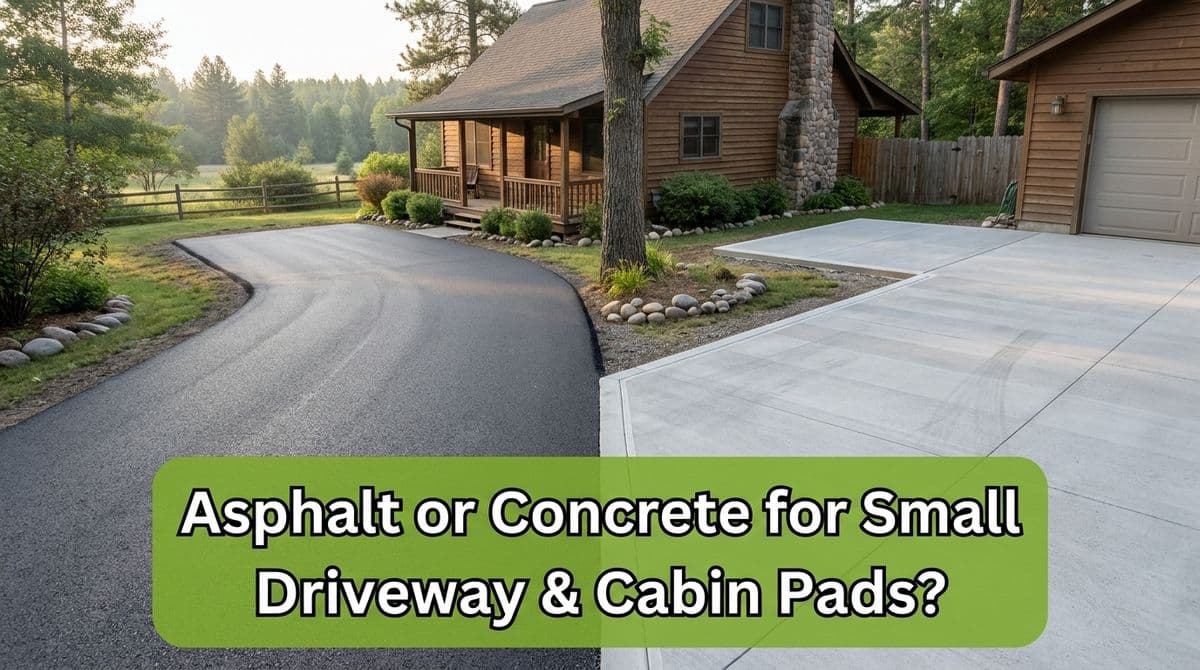
Asphalt or Concrete for a Small Driveway or Cabin Pad?
We recently got a call from a homeowner — let’s call her Karen — asking if we did blacktopping. She had a small cabin that had been lifted and set back down, and now there was about 200–225 square feet that needed to be filled in next to her existing blacktop. Her first thought was, “I just need a little blacktop poured.”
When we told her we mostly do concrete (and only sealcoat asphalt), the next question came fast: “Could concrete be an option instead of blacktop? And what would it cost?” That’s a question we hear a lot, especially for small driveway sections, parking pads, and cabin setups.
So let’s walk through how we helped Karen think it through — and how you can decide between asphalt (blacktop) and concrete for your own small driveway or cabin pad.
Cost: What You Can Expect per Square Foot
With Karen, we were very upfront on pricing. For a small job in her area, we told her concrete would be around $11 per square foot, partly because of travel time and setup for a relatively small pour.
In our region, homeowners typically see:
- Concrete small pad: about $9–$12 per sq. ft. depending on size, thickness, and access
- Asphalt (blacktop) small pad: about $5–$8 per sq. ft. for comparable area and base prep
On a roughly 225 sq. ft. pad like Karen’s, that puts you in the ballpark of:
- Concrete: $2,000–$2,500+
- Asphalt: $1,200–$1,800+
Asphalt often wins on upfront cost, especially on larger areas. But cost per square foot is only part of the story — lifespan, maintenance, and what you’re using the pad for matter just as much.
Durability and Maintenance: Which Lasts Longer?
When Karen asked whether switching from blacktop to concrete would look odd or cause problems, we talked about how each material behaves over time.
Asphalt (Blacktop)
- Lifespan: 15–25 years with good maintenance
- Maintenance: Needs regular sealcoating every 2–4 years, crack filling, occasional patching
- Weather: Softer in hot weather, can rut under heavy loads if the base isn’t solid
Concrete
- Lifespan: 25–40+ years when properly installed and cured
- Maintenance: Mostly limited to joint sealing and keeping de-icing chemicals to a minimum
- Weather: Holds up very well to heat; in freeze–thaw climates, base prep and drainage are critical
For a small cabin pad where you’re parking vehicles, setting up a grill, or walking in and out all season, concrete is usually the longer-term, lower-maintenance option.
When It Makes Sense to Switch From Blacktop to Concrete
In Karen’s case, the existing driveway was asphalt, but the area under the lifted cabin was a perfect rectangle that needed to be filled in. She was worried that cutting into the old blacktop and pouring concrete would look strange.
Here are times we often recommend switching materials, even if you already have blacktop nearby:
- Small, defined pad off an existing driveway (e.g., cabin pad, parking spot, RV pad)
- Heavy use in one spot: trailers, campers, work trucks, or equipment
- Problem areas in asphalt that keep rutting, sinking, or cracking despite repairs
- Upgrade goals: You want a cleaner, brighter, or more finished look around a cabin or garage
To tie it in visually, we’ll often cut a clean, straight line into the existing blacktop, remove the section, and pour concrete so the joint looks intentional. That’s exactly what we discussed doing for Karen: trimming the edge of her asphalt so the new pad and old driveway blended neatly.
How We Evaluate Your Site: Photos, Dimensions, and Access
During our call, we asked Karen to text us photos and rough measurements of the area — something we do with a lot of small projects. For pads in the 200–300 sq. ft. range, that’s often enough to give a ballpark estimate and an honest opinion on whether asphalt or concrete makes more sense.
When we look at your pictures and notes, we’re paying attention to:
- Size and shape of the pad (a simple rectangle is cheaper than a complex shape)
- Tie-in to existing surfaces (blacktop, gravel, or concrete already there)
- Base condition: Is there solid gravel or just soft soil?
- Access: Can we get a truck close, or will everything be wheelbarrowed?
Small, straightforward pads like Karen’s can often be completed in a single day, with light use after a couple of days and full use after proper curing.
Practical Tips If You’re Deciding Right Now
If you’re staring at a cabin, garage, or driveway edge and wondering what to do, here’s how we usually break it down with customers:
- Choose asphalt if you’re covering a large area on a tight budget and don’t mind periodic maintenance.
- Choose concrete if you’re doing a smaller pad, want a long-term solution, or need something that handles weight without rutting.
- Don’t mix and match randomly. If you switch materials, cut clean lines and make the transition look intentional.
- Ask for a realistic timeline. Like we told Karen, we’re usually booked out a couple of weeks in peak season, but small pads can often be scheduled and finished fairly quickly.
If you’re unsure, do what Karen did: snap a few pictures, jot down rough dimensions, and reach out. We’re happy to look things over and give you our straight, best opinion on whether asphalt, concrete, or a combination is the right move for your small driveway or cabin pad.